
For iPad and Apple Pencil
Write it out. Your tutor reads along.
TrueNerd is a math and science tutor for iPad. Write on the page as you would on paper. When you pause, the tutor reads your handwriting, underlines the step that went wrong and asks a question that leads you to the next step.
For iPadComing soon to the App Store
See more lessonsGrade 8 through college · 16 languages · Live voice
A real lesson, sped up. The student is scripted; the tutor's replies are unedited.
How a lesson works
You and the tutor work on the same page. There are no forms to fill in and no chat box.
Write on the page
Write with Apple Pencil on a page that grows as you go. Type the problem, or photograph it from your book.
Pause
Stop writing for a moment. The tutor reads the whole page, including diagrams and work you've crossed out.
Fix the underlined step
Look again at the step the tutor underlines in red. A short note beside your page says what to check, and the tutor tells you when your work is right.
Watch a lesson
In each lesson a scripted student makes one mistake on a hard problem. The tutor's replies are unedited and in the language you selected.
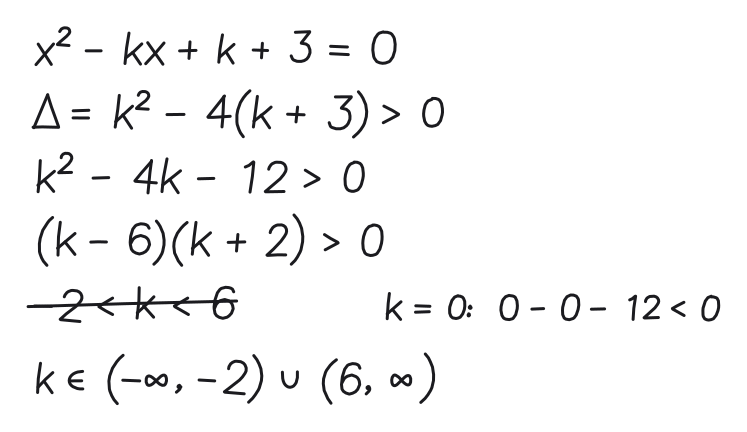
Algebra
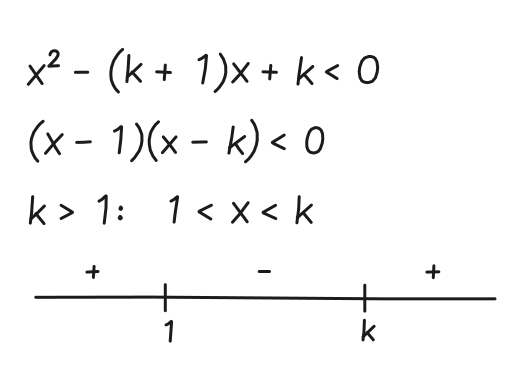
Quadratic with a parameter. The student factors correctly but chooses the interval on the wrong side of the roots.
The problem For which values of k does x² − kx + k + 3 = 0 have two distinct real roots?
Read the whole lesson
The problem: For which values of k does x² − kx + k + 3 = 0 have two distinct real roots?
The student writes on the page.
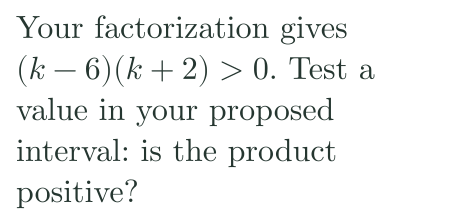
The tutor underlines a step in red.
Tutor, out loud: “Your factorization is correct, but check the signs in your final interval.”
Tutor, in writing:
The student corrects their work.
Student, out loud: “Oh. I tried k = 0 and got minus twelve, and that's not bigger than zero. So the answer is the outside part, not the middle?”
Tutor, out loud: “Yes, the outside intervals are correct. Your revised answer excludes the endpoints, as it should.”
Tutor, in writing:
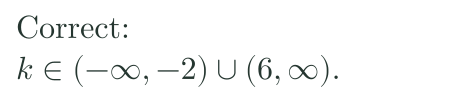
The tutor confirms the solution is complete.
Geometry
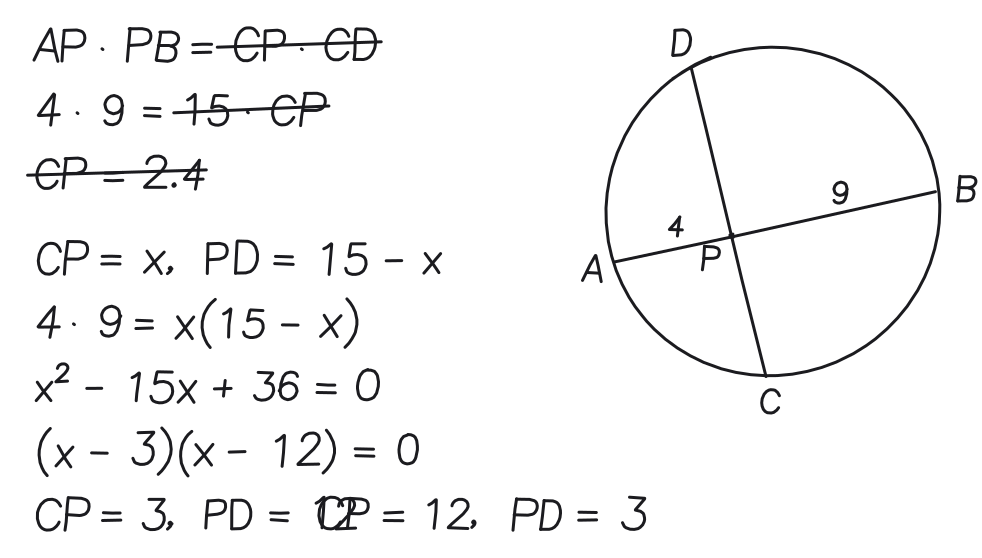
Intersecting chords. The student multiplies by a whole chord instead of one of its two segments.
The problem Chords AB and CD of a circle intersect at P. AP = 4, PB = 9 and CD = 15. Find CP and PD.
Read the whole lesson
The problem: Chords AB and CD of a circle intersect at P. AP = 4, PB = 9 and CD = 15. Find CP and PD.
The student writes on the page.
The tutor underlines a step in red.
Tutor, out loud: “Check which two lengths the intersecting-chords theorem multiplies. The full chord is not one of those two segments.”
Tutor, in writing:
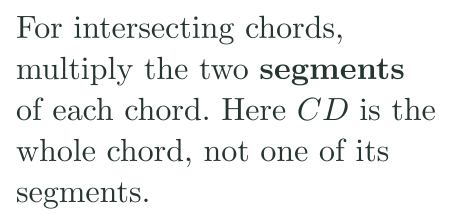
The student corrects their work.
Student, out loud: “Oh, so it's the two pieces of CD on either side of P, not the whole chord. Then I need a quadratic.”
Tutor, out loud: “Yes, you corrected the chord relationship, and your quadratic and factoring are right. What does your other root mean for the two labeled lengths?”
Tutor, in writing:
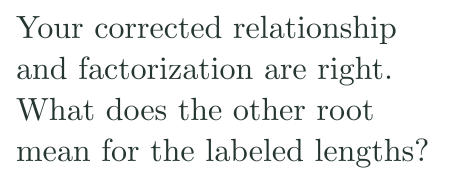
The student corrects their work.
Student, out loud: “Right, P could just as well be closer to D. So CP = 12 and PD = 3 works too.”
Tutor, out loud: “Exactly. Both assignments work, and the given lengths don't distinguish between them.”
Tutor, in writing:
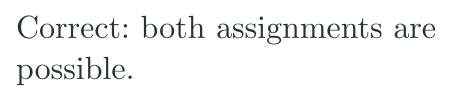
The tutor confirms the solution is complete.
Calculus
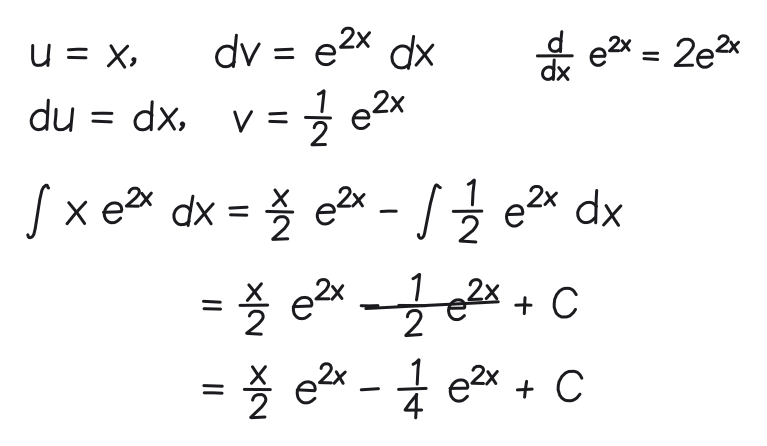
Integration by parts. The student drops a factor of ½, then asks out loud why the line is wrong.
The problem Evaluate ∫ x·e^(2x) dx.
Read the whole lesson
The problem: Evaluate ∫ x·e^(2x) dx.
The student writes on the page.
The tutor underlines a step in red.
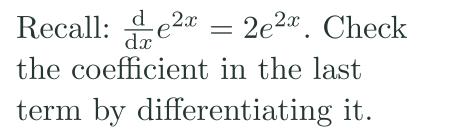
Tutor, out loud: “Your integration by parts setup is right. Check the coefficient in the last term by differentiating it.”
Tutor, in writing:
Student, out loud: “Why is the last line wrong? Isn't the integral of e to the 2x just e to the 2x?”
The tutor underlines a step in red.
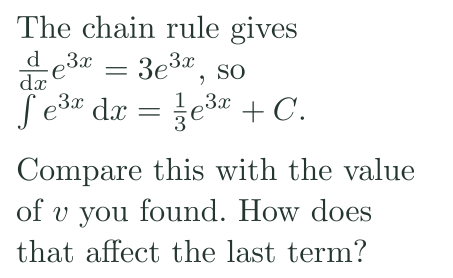
Tutor, out loud: “Not quite: the chain rule introduces an extra factor when you differentiate the exponential. Your earlier value for the antiderivative already accounts for that; use it to reconsider the last term.”
Tutor, in writing:
The student corrects their work.
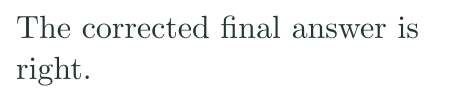
Tutor, out loud: “Yes, that correction is right. Your final antiderivative is correct.”
Tutor, in writing:
The tutor confirms the solution is complete.
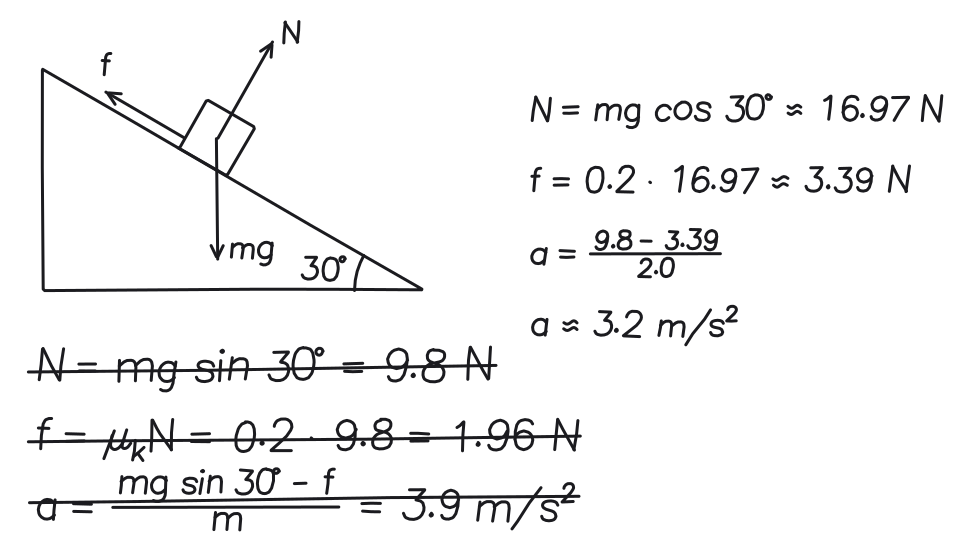
Physics
Block on an incline with friction. The student swaps sine and cosine when calculating the normal force.
The problem A 2.0 kg block slides down a 30° incline. The coefficient of kinetic friction is 0.20. Find the block's acceleration. Use g = 9.8 m/s².
Read the whole lesson
The problem: A 2.0 kg block slides down a 30° incline. The coefficient of kinetic friction is 0.20. Find the block's acceleration. Use g = 9.8 m/s².
The student writes on the page.
The tutor underlines a step in red.
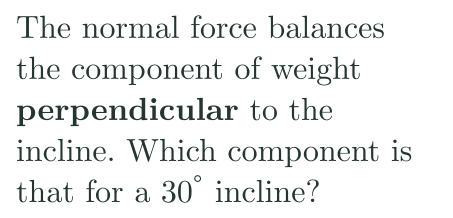
Tutor, out loud: “Your force directions look good, but check which component of weight is perpendicular to the incline. That affects the friction and acceleration too.”
Tutor, in writing:
The student corrects their work.
Student, out loud: “Right, the normal force only balances the part of gravity that pushes into the ramp. That's the cosine part, so I redid it.”
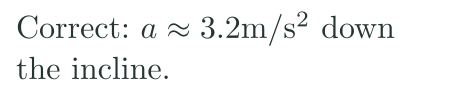
Tutor, out loud: “Yes, your corrected normal force and friction are right, and your acceleration is correct down the incline.”
Tutor, in writing:
The tutor confirms the solution is complete.
Chemistry
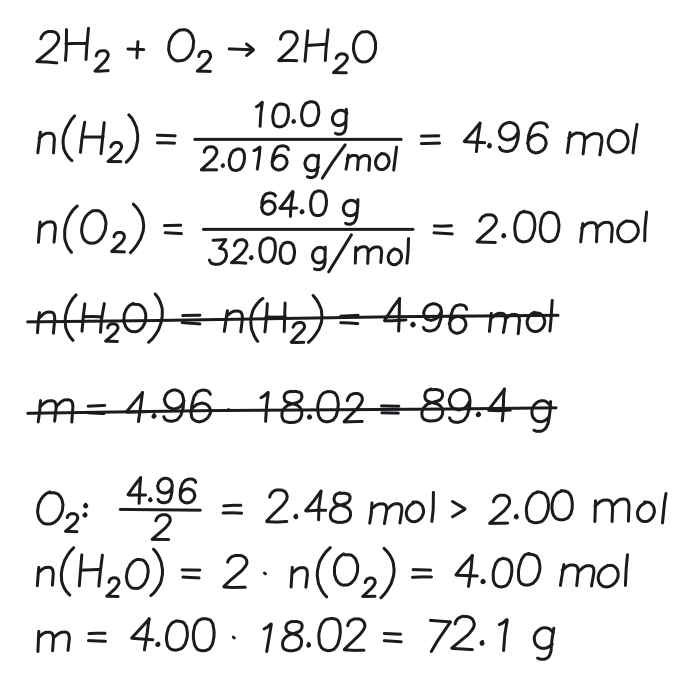
Limiting reactant. The student calculates how much water forms using the excess reactant.
The problem 10.0 g of hydrogen gas reacts with 64.0 g of oxygen gas. What mass of water forms?
Read the whole lesson
The problem: 10.0 g of hydrogen gas reacts with 64.0 g of oxygen gas. What mass of water forms?
The student writes on the page.
The tutor underlines a step in red.
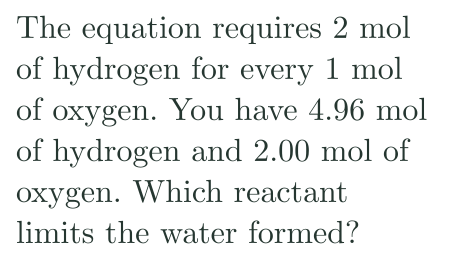
Tutor, out loud: “Your mole conversions are correct. Check whether both reactants are available in the proportions needed before using all the hydrogen.”
Tutor, in writing:
The student corrects their work.
Student, out loud: “Wait, the oxygen runs out first. 4.96 moles of hydrogen would need 2.48 moles of oxygen, and I only have 2.”
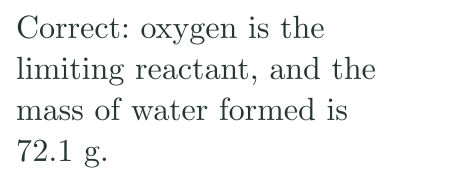
Tutor, out loud: “Exactly. Oxygen is limiting, and your corrected water mass is right.”
Tutor, in writing:
The tutor confirms the solution is complete.
Talk it through
Tap Live to talk with your tutor while you write. Ask a question without stopping to type it.
The microphone is only on while Live is on, and your voice is never recorded.
Ask while you write
Keep writing while you talk. There's nothing to type and no button to hold.
Ask about what's on your page
Ask “Wait, why is that wrong?” The tutor sees your page, so it knows what you mean.
Think out loud
Explain how you got to a step, so the tutor can hear where your reasoning went off.
Hear the gist, read the details
The tutor speaks briefly. The exact mathematics appears in writing beside your page, where you can read it again.
Interrupt any time
Cut in, change your mind or ask the tutor to slow down.
Work out the next step yourself
Ask a math question out loud and the tutor answers from your page. Ask for the next step and it asks you a question that helps you find it.
Everything paper does, plus a tutor
Photograph a problem
Photograph a problem in your textbook or on a worksheet. TrueNerd straightens the photo and adds it to your page. Only the part you crop is sent.
Learn in 16 languages
Pick the language your tutor speaks and writes in. It doesn't have to match your iPad's language.
Write, draw and move your work
Write with a fountain pen, draw diagrams with a ruler and move work with a lasso. The page grows as you write.
Keep your work private
Use TrueNerd with no sign-in, ads or tracking. Your lessons stay on your iPad, and you can delete your account any time in Settings.
Math, physics and chemistry
From grade 8 through college. TrueNerd helps with problems that take several steps, with diagrams, units and proper notation.
MathAlgebra 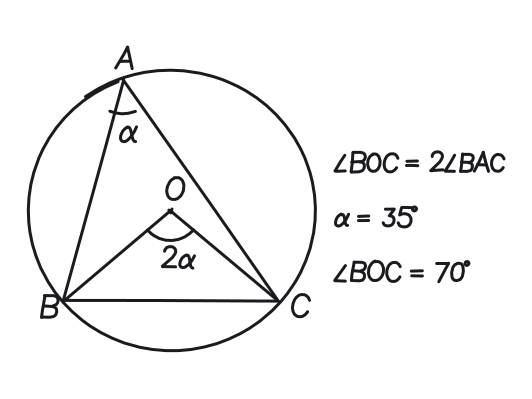
MathGeometry 
MathTrigonometry 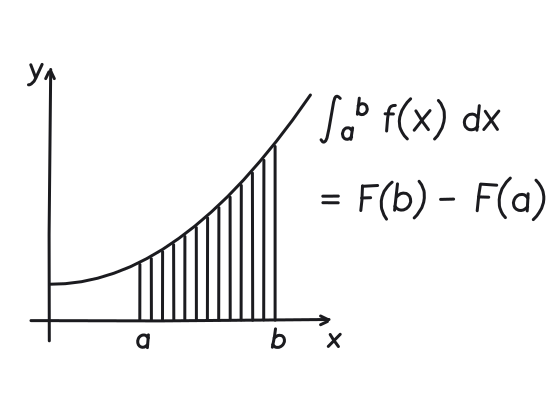
MathCalculus 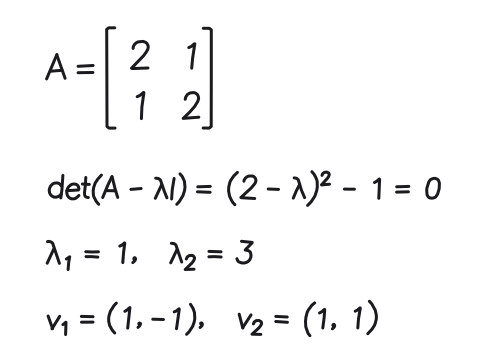
MathLinear algebra 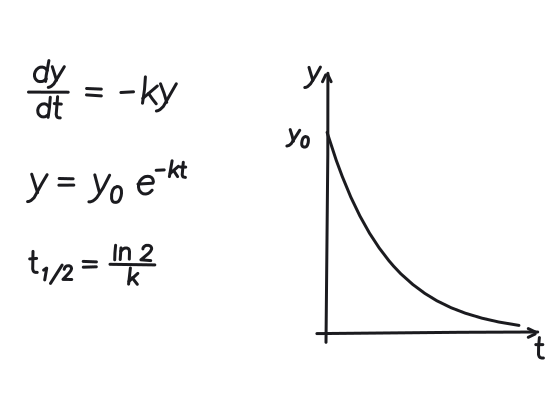
MathDifferential equations 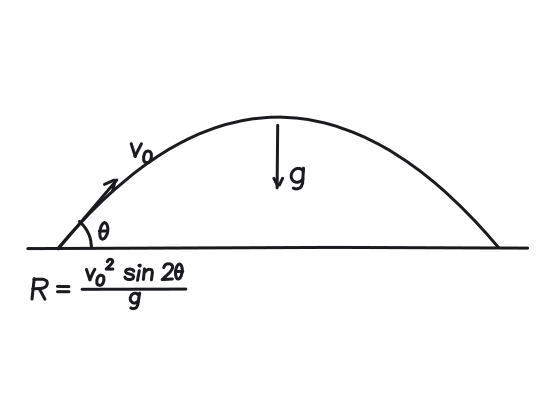
PhysicsMechanics 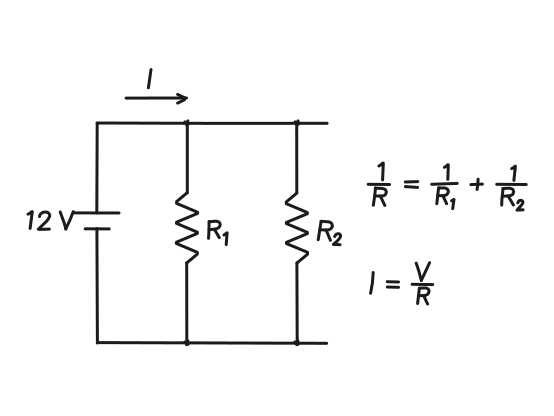
PhysicsElectric circuits 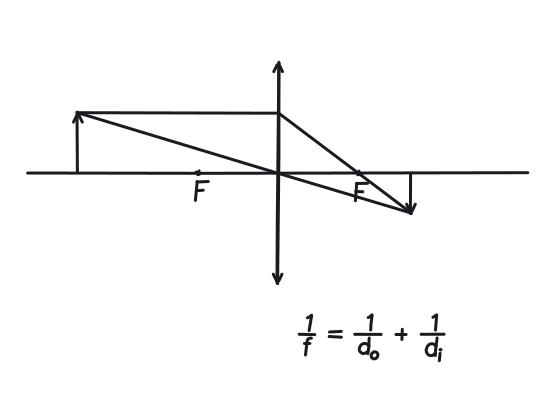
PhysicsOptics 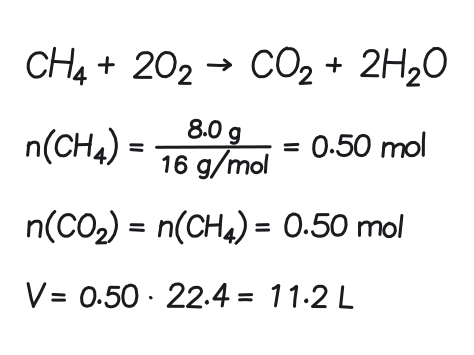
ChemistryChemical reactions 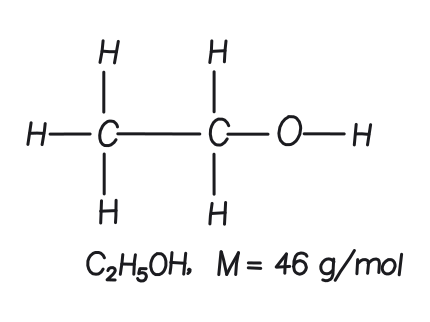
ChemistryMolecules and bonds 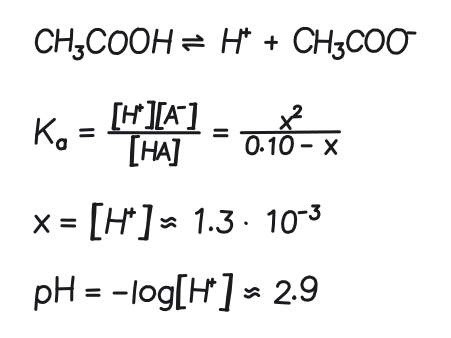
ChemistryEquilibrium and pH
For parents
TrueNerd leaves the thinking to the student.
Questions instead of answers
The tutor points out which step to check and asks questions. It confirms correct work and checks the whole solution before calling the problem complete.
For ages 13 and up
Where required, a parent approves TrueNerd and its purchases through Apple.
No ads, tracking or chat
TrueNerd has no ads, no tracking and no chat with other users.
How it uses AI
The tutor's replies come from an AI model. Lessons are used only to create those replies, never to train AI.
Lessons stay on the iPad
Lessons are saved only on the student's iPad. They are never uploaded to our servers.
Delete the account any time
Delete Account in Settings removes the account and every lesson.
Questions
When can I get TrueNerd?
Soon. TrueNerd is coming to the App Store for iPad, and this page will link to it on launch day.
Which devices does it work on?
iPad with iPadOS 27 or later. Apple Pencil is recommended; a finger works too.
Will it just give me the answers?
No. TrueNerd underlines what to look at again, asks questions and tells you when you are right.
How much does it cost?
TrueNerd will be a monthly subscription with a free trial, billed through your Apple Account. The App Store shows the price before you subscribe.
Do I need to create an account?
No. There is no sign-in: open TrueNerd and start working.
Which languages does the tutor speak?
The tutor writes and speaks in Deutsch, English, Español, Français, Italiano, Nederlands, Polski, Português (Brasil), Türkçe, Русский, Українська, العربية, हिन्दी, 日本語, 简体中文, 한국어.
Can the tutor make mistakes?
Yes. AI can make mistakes, so check important results.
What happens to my work?
Your lessons are saved only on your iPad and never uploaded to our servers. They are used only to create the tutor's replies, never to train AI.
Is there a version for iPhone or Mac?
No. TrueNerd is built for the large iPad screen and Apple Pencil.
For iPadComing soon to the App Store