
AI math and science tutor for iPad Stuck on a step? Get unstuck.
Do your math and science homework by hand on iPad, from grade 8 through college. When you're stuck, your tutor shows which step to check and asks the question that gets you going again.
A real lesson, sped up. The student is scripted; the tutor's replies are unedited.
How a lesson works
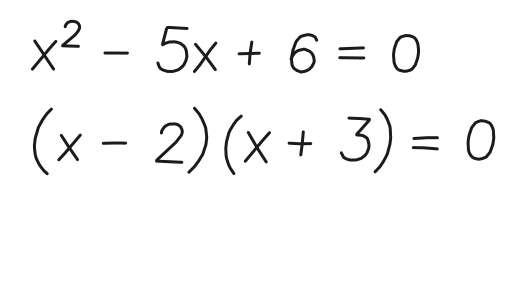
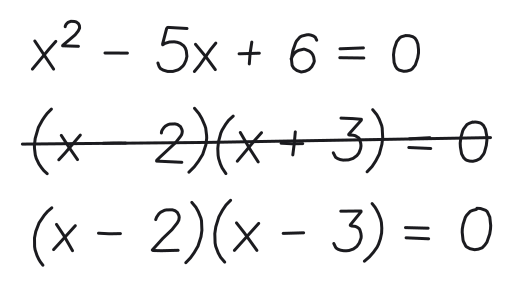
Solve it yourself
Work a problem from your textbook or homework by hand, with Apple Pencil.
Multiply it back out. Do you get +6?
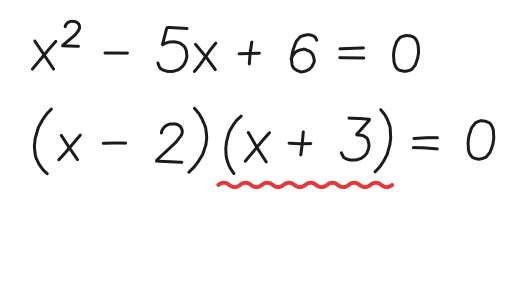
See which step to check
When you pause, the tutor reads your work and underlines a step to check.
LiveWait, so both signs are minus?
Talk it through
Stuck or losing the thread? Tap Live and talk it through out loud, in a natural back-and-forth.
Watch a lesson
Algebra
Quadratic with a parameter. The student factors correctly but chooses the interval on the wrong side of the roots.
The problem For which values of k does x² − kx + k + 3 = 0 have two distinct real roots?
Read the whole lesson
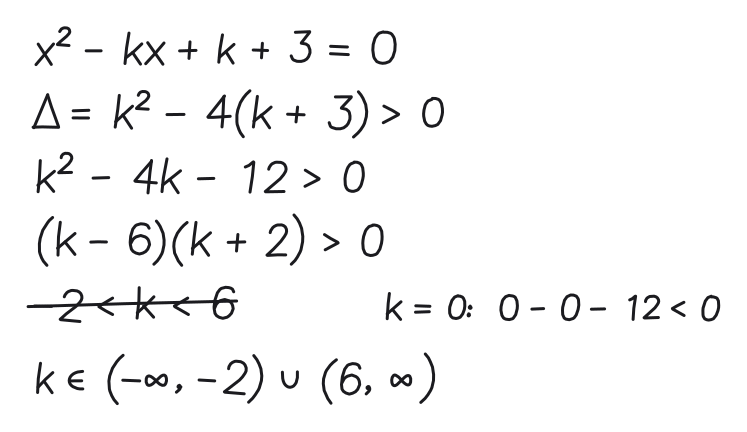
The problem: For which values of k does x² − kx + k + 3 = 0 have two distinct real roots?
The student writes on the page.
The tutor underlines a step in red.
Tutor, out loud: “Your factorization is correct, but check the signs in your final interval.”
Tutor, in writing:
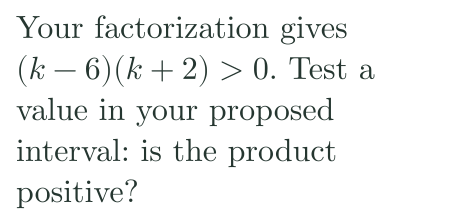
The student corrects their work.
Student, out loud: “Oh. I tried k = 0 and got minus twelve, and that's not bigger than zero. So the answer is the outside part, not the middle?”
Tutor, out loud: “Yes, the outside intervals are correct. Your revised answer excludes the endpoints, as it should.”
Tutor, in writing:
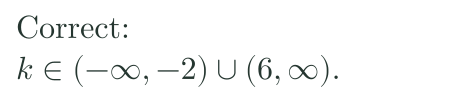
The tutor confirms the solution is complete.
Geometry
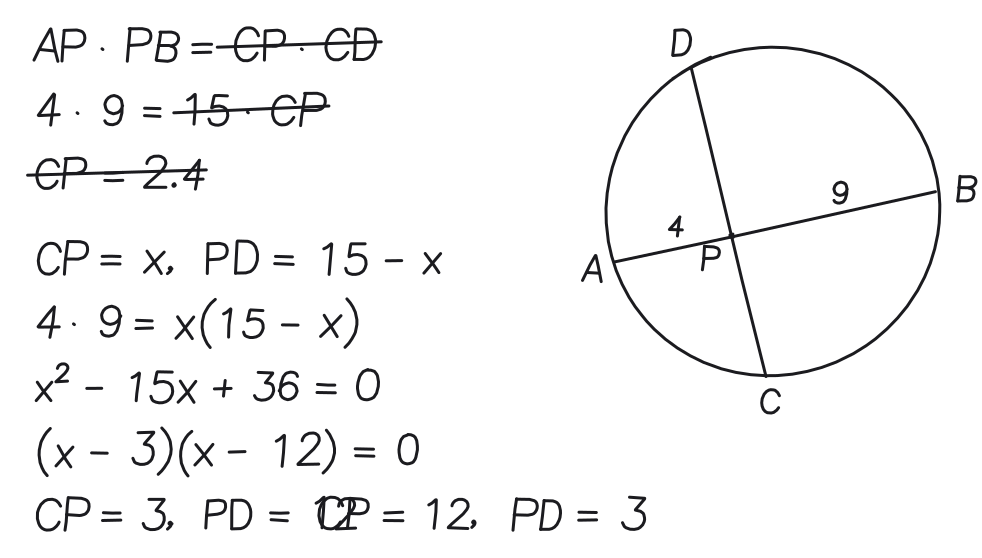
Intersecting chords. The student multiplies by a whole chord instead of one of its two segments.
The problem Chords AB and CD of a circle intersect at P. AP = 4, PB = 9 and CD = 15. Find CP and PD.
Read the whole lesson
The problem: Chords AB and CD of a circle intersect at P. AP = 4, PB = 9 and CD = 15. Find CP and PD.
The student writes on the page.
The tutor underlines a step in red.
Tutor, out loud: “Check which two lengths the intersecting-chords theorem multiplies. The full chord is not one of those two segments.”
Tutor, in writing:
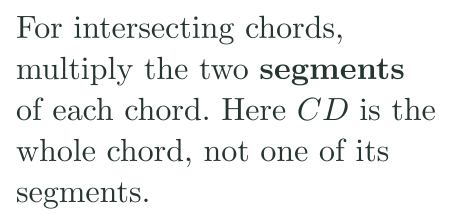
The student corrects their work.
Student, out loud: “Oh, so it's the two pieces of CD on either side of P, not the whole chord. Then I need a quadratic.”
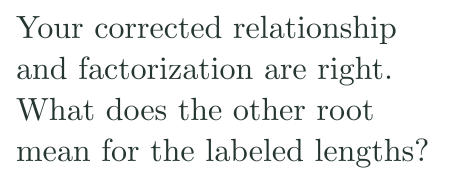
Tutor, out loud: “Yes, you corrected the chord relationship, and your quadratic and factoring are right. What does your other root mean for the two labeled lengths?”
Tutor, in writing:
The student corrects their work.
Student, out loud: “Right, P could just as well be closer to D. So CP = 12 and PD = 3 works too.”
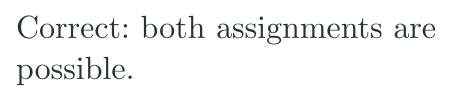
Tutor, out loud: “Exactly. Both assignments work, and the given lengths don't distinguish between them.”
Tutor, in writing:
The tutor confirms the solution is complete.
Calculus
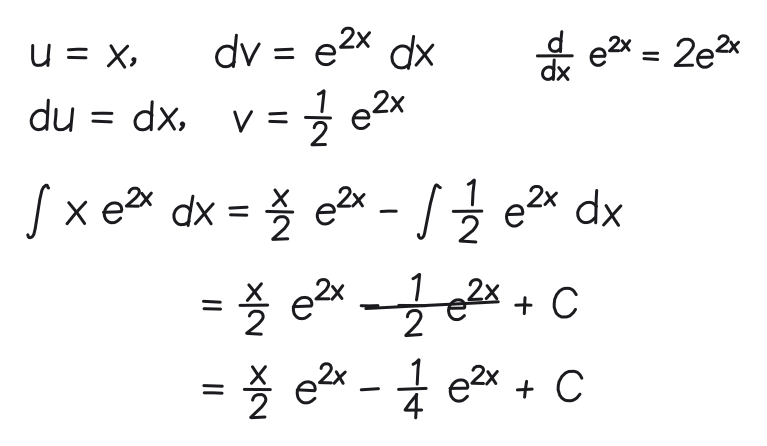
Integration by parts. The student drops a factor of ½, then asks out loud why the line is wrong.
The problem Evaluate ∫ x·e^(2x) dx.
Read the whole lesson
The problem: Evaluate ∫ x·e^(2x) dx.
The student writes on the page.
The tutor underlines a step in red.
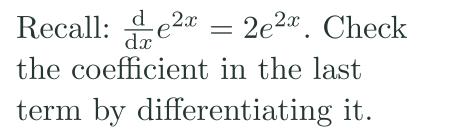
Tutor, out loud: “Your integration by parts setup is right. Check the coefficient in the last term by differentiating it.”
Tutor, in writing:
Student, out loud: “Why is the last line wrong? Isn't the integral of e to the 2x just e to the 2x?”
The tutor underlines a step in red.
Tutor, out loud: “Not quite: the chain rule introduces an extra factor when you differentiate the exponential. Your earlier value for the antiderivative already accounts for that; use it to reconsider the last term.”
Tutor, in writing:
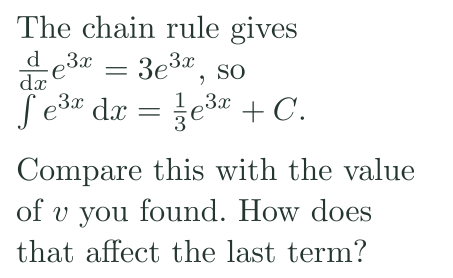
The student corrects their work.
Tutor, out loud: “Yes, that correction is right. Your final antiderivative is correct.”
Tutor, in writing:
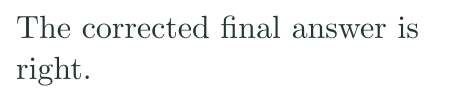
The tutor confirms the solution is complete.
Physics
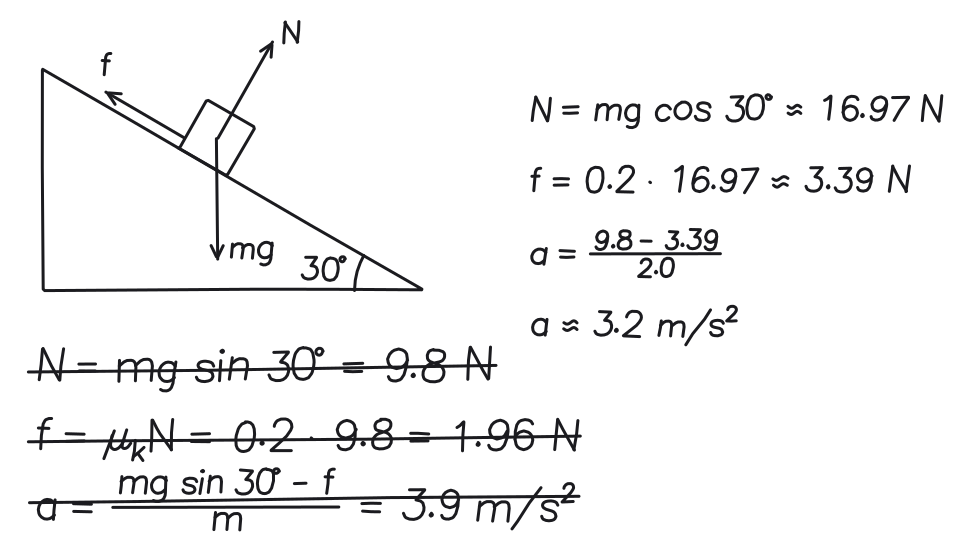
Block on an incline with friction. The student swaps sine and cosine when calculating the normal force.
The problem A 2.0 kg block slides down a 30° incline. The coefficient of kinetic friction is 0.20. Find the block's acceleration. Use g = 9.8 m/s².
Read the whole lesson
The problem: A 2.0 kg block slides down a 30° incline. The coefficient of kinetic friction is 0.20. Find the block's acceleration. Use g = 9.8 m/s².
The student writes on the page.
The tutor underlines a step in red.
Tutor, out loud: “Your force directions look good, but check which component of weight is perpendicular to the incline. That affects the friction and acceleration too.”
Tutor, in writing:
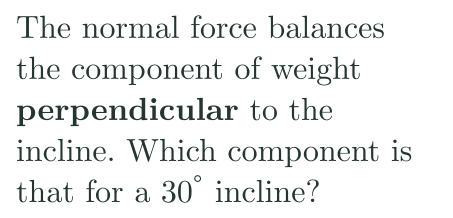
The student corrects their work.
Student, out loud: “Right, the normal force only balances the part of gravity that pushes into the ramp. That's the cosine part, so I redid it.”
Tutor, out loud: “Yes, your corrected normal force and friction are right, and your acceleration is correct down the incline.”
Tutor, in writing:
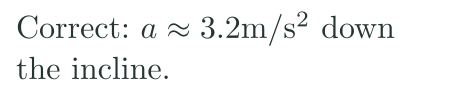
The tutor confirms the solution is complete.
Chemistry
Limiting reactant. The student calculates how much water forms using the excess reactant.
The problem 10.0 g of hydrogen gas reacts with 64.0 g of oxygen gas. What mass of water forms?
Read the whole lesson
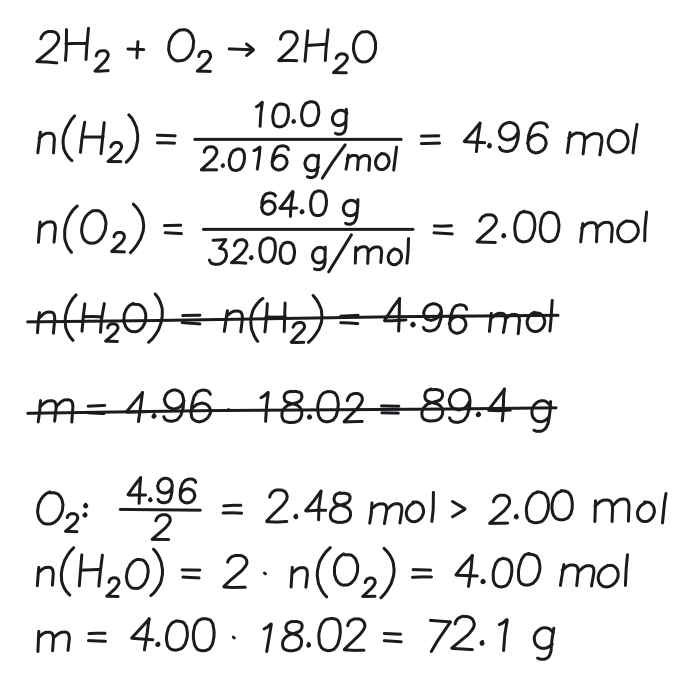
The problem: 10.0 g of hydrogen gas reacts with 64.0 g of oxygen gas. What mass of water forms?
The student writes on the page.
The tutor underlines a step in red.
Tutor, out loud: “Your mole conversions are correct. Check whether both reactants are available in the proportions needed before using all the hydrogen.”
Tutor, in writing:
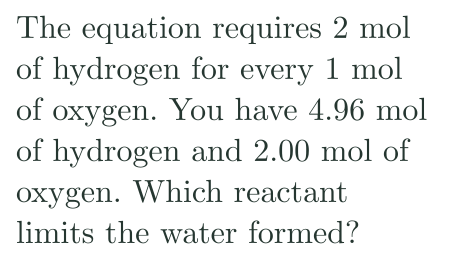
The student corrects their work.
Student, out loud: “Wait, the oxygen runs out first. 4.96 moles of hydrogen would need 2.48 moles of oxygen, and I only have 2.”
Tutor, out loud: “Exactly. Oxygen is limiting, and your corrected water mass is right.”
Tutor, in writing:
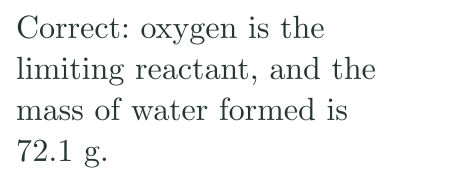
The tutor confirms the solution is complete.
Why solve it yourself?
Watching a solution can feel like learning. Working it out yourself, with a hint when you're stuck, is what builds understanding.
Instead of watching videos
A video shows someone else's thinking. Here you do the thinking yourself, with hints on your own steps.
Instead of AI chat answers
Getting answers from an AI chat feels helpful, but practicing that way can leave you less able to solve problems on your own.
Instead of endless drills
Repetition builds speed. The tutor also asks why each step works, so you understand what you're repeating.
Instead of one pace for the whole class
Learning takes many solved problems, and a class moves at one speed: too fast for some, too slow for others. Here you work through as many as you need, at your own pace.
What the research says
Tutoring can move your child from the middle to ahead of 61 in 1001
Line up 100 students in the same grade by score. Your child starts in the middle. Across 89 trials, the average tutored student moved past 11 of them.
Results from studies of tutoring, not of TrueNerd.
AI tutoring beats AI chat answers by about 20%2
On a later exam without AI, students who practiced with AI tutoring scored about 20% higher than students who got answers from an AI chat.
About 1,000 high-school math students. The AI tutoring group scored about as well as classmates who practiced without AI; the AI chat group scored 17% lower.
More findings
Catching up3
Teenagers who were behind in math and got daily small-group tutoring improved their math scores and their grades in other subjects.
Getting ahead4
Students who worked ahead of their grade outperformed same-age peers across a century of studies.
Feedback on every step5
Computer tutors that give feedback on each step of a problem came close to human tutors in a review of dozens of studies.
Working it out sticks6
In memory studies, people remember what they work out themselves better than what they only read.
Happier, too7
During COVID school closures, online tutoring raised middle-school students' grades and their well-being.
Handwriting engages the brain8
One brain-imaging study found that writing by hand engages wider brain networks than typing.
Sources
- Nickow, Oreopoulos & Quan, The Promise of Tutoring for PreK–12 Learning, 2024
- Bastani et al., Generative AI without guardrails can harm learning, PNAS 2025
- Guryan et al., Not Too Late, American Economic Review 2023
- Steenbergen-Hu, Makel & Olszewski-Kubilius, Ability grouping and acceleration, Review of Educational Research 2016
- VanLehn, The Relative Effectiveness of Human Tutoring, Intelligent Tutoring Systems, and Other Tutoring Systems, Educational Psychologist 2011
- Bertsch et al., The generation effect: A meta-analytic review, Memory & Cognition 2007
- Carlana & La Ferrara, Apart but Connected, American Economic Review 2025
- Van der Weel & Van der Meer, Handwriting but not typewriting leads to widespread brain connectivity, 2024
When you're stuck, just talk
Most of the time you work quietly while the tutor underlines slips and asks short questions. When you're really stuck, tap Live and talk it over. You can interrupt, think out loud and ask it to explain.
The microphone is on only during Live, and voices are never recorded.
Ask while you write
Just talk; there's nothing to type.
Ask about what's on your page
“Why is that wrong?” is enough. The tutor sees your page.
Think out loud
Explain your steps and the tutor hears where your reasoning slipped.
Short out loud, full math on the page
The tutor keeps it short out loud and writes the math beside your page.
Everything paper does, plus a tutor
Photograph a problem
Snap a problem from a textbook or worksheet and start working on it.
Learn in 16 languages
The tutor speaks and writes in your language.
Write, draw and move your work
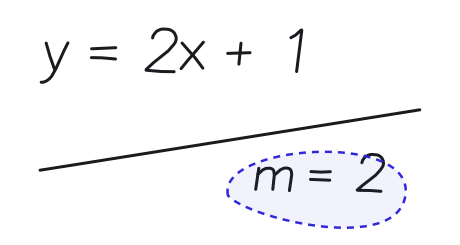
A fountain pen, a ruler for diagrams and a lasso to move your work around.
Keep your work private
No sign-in, no ads and no tracking. Lessons stay on your iPad.
Math, physics and chemistry
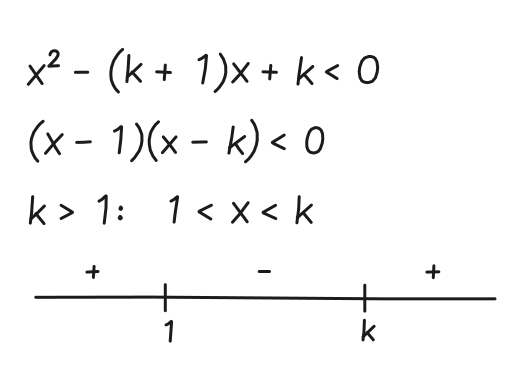
Algebra 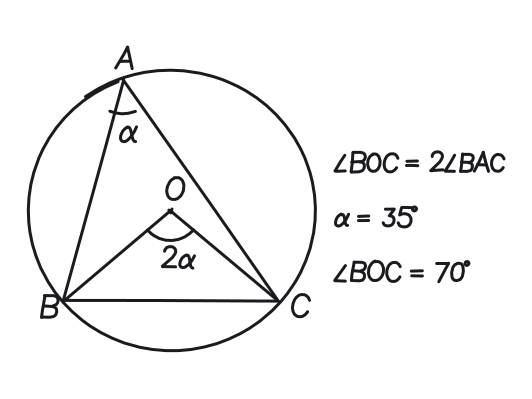
Geometry 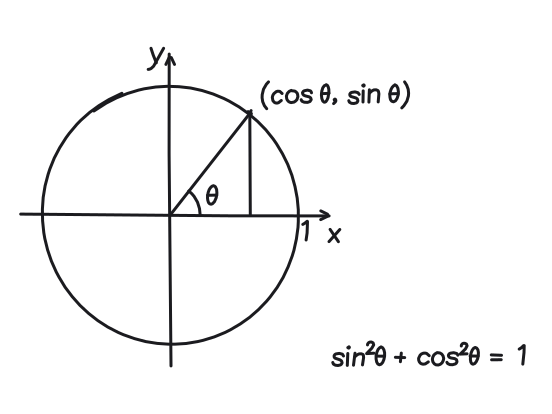
Trigonometry 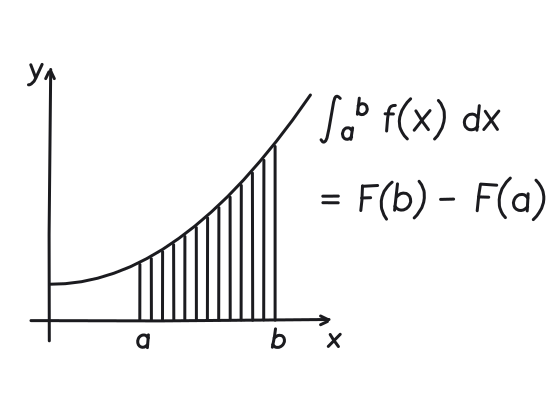
Calculus 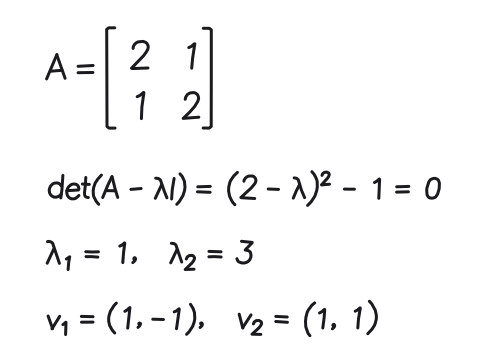
Linear algebra 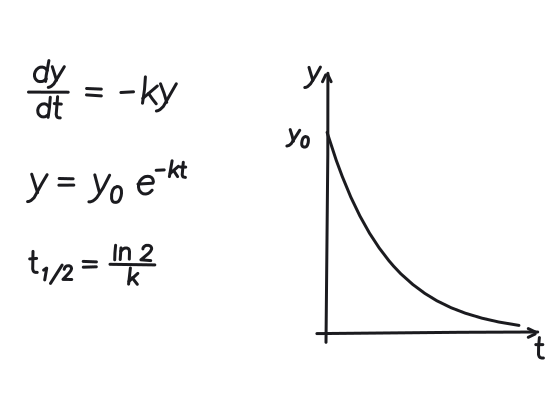
Differential equations 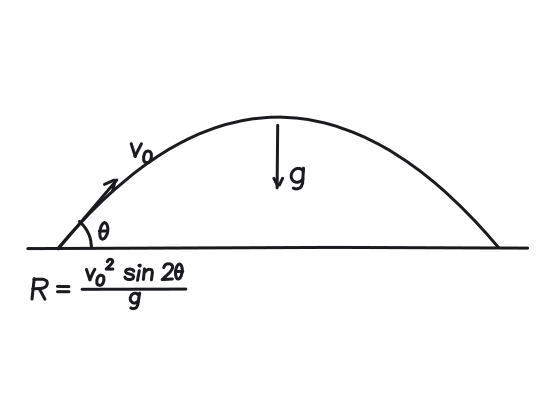
Mechanics 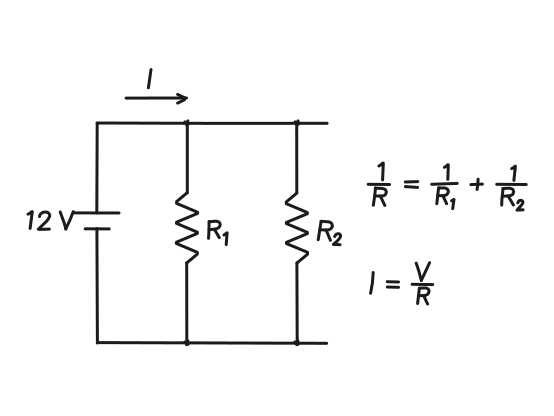
Electric circuits 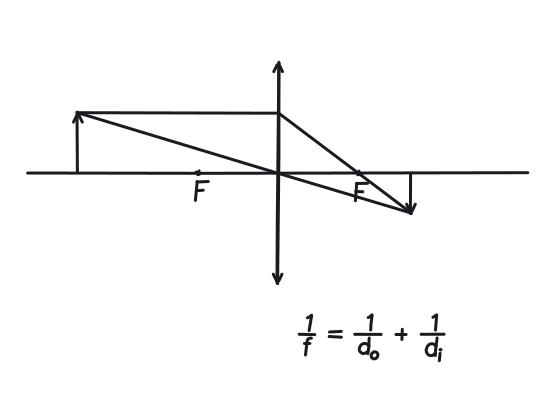
Optics 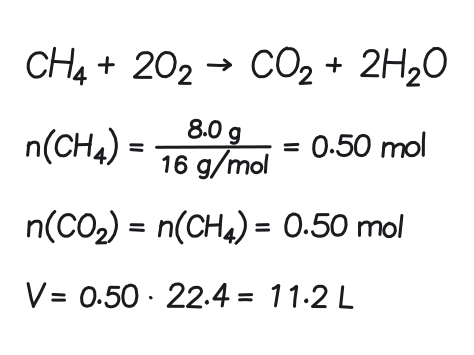
Chemical reactions 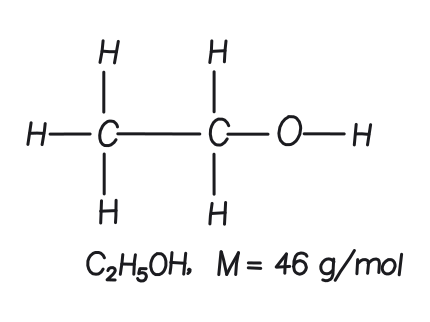
Molecules and bonds 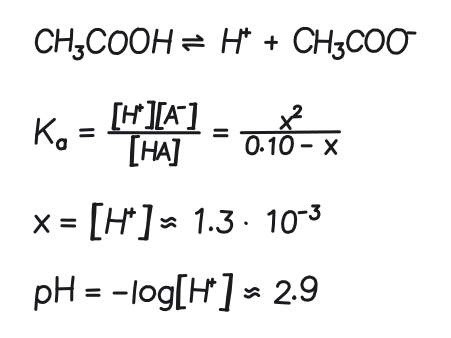
Equilibrium and pH
For parents
Questions instead of answers
The tutor points to the mistake and asks questions, so your child does the thinking.
For ages 13 and up
Where required, you approve the app and its purchases through Apple.
No ads, tracking or strangers
Nothing competes for your child's attention, and no one else can reach them.
Lessons stay private
Lessons stay on the iPad, are never used to train AI and can be deleted any time in Settings.
Questions
When can I get TrueNerd?
Soon, on the App Store for iPad. We'll link to it here on launch day.
Which devices does it work on?
iPad with iPadOS 27 or later. Apple Pencil works best; a finger works too.
Will it just give me the answers?
No. Bring your homework problem: it points to the mistake and asks questions until you find the answer yourself.
How much does it cost?
A monthly subscription with a free trial, through your Apple Account.
Do I need to create an account?
No. Open TrueNerd and start.
Which languages does the tutor speak?
The tutor writes and speaks in Deutsch, English, Español, Français, Italiano, Nederlands, Polski, Português (Brasil), Türkçe, Русский, Українська, العربية, हिन्दी, 日本語, 简体中文, 한국어.
Can the tutor make mistakes?
Yes, sometimes. Check important results.
What happens to my work?
It stays on your iPad and is never used to train AI.
Is there a version for iPhone or Mac?
No. TrueNerd is made for iPad and Apple Pencil.
Does it replace a textbook or class?
No. Use it alongside your textbook or course, when you solve the problems.
Still have a question? Write to us at hello@truenerd.app.
Bring your hardest problem.
TrueNerd is coming soon to the App Store for iPad.